Applications and Industry Use Cases of Dual Circular Spline Harmonic reducers
These advantages make them highly valuable in industries where precision, reliability, and high-performance motion control are critical.
 March 19, 2025


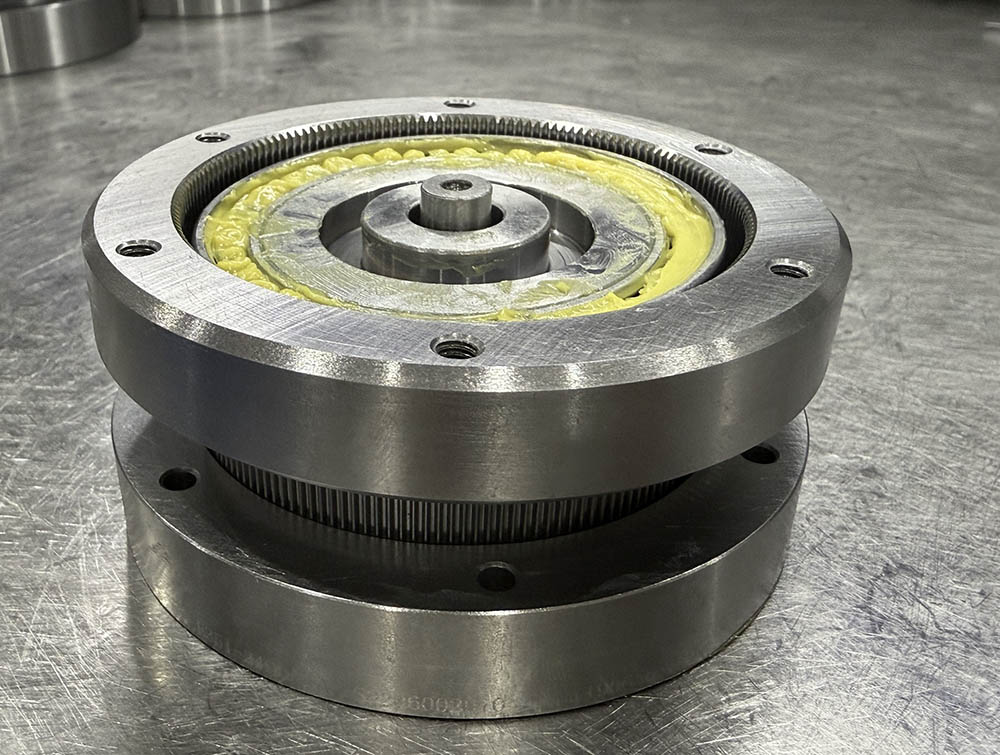
Dual circular spline harmonic reducers are an advanced evolution of strain wave gearing, designed to provide higher torque, improved stiffness, and enhanced load distribution. These advantages make them highly valuable in industries where precision, reliability, and high-performance motion control are critical.
Their compact design, zero backlash, and enhanced mechanical strength enable them to be used in a wide range of applications, from robotics and fully automated equipment to medical devices and industrial automation.
Robotics and Automation
Robotic Arms and Precision Manipulators
- In industrial robotics, high-precision movement with zero backlash is essential for tasks like pick-and-place, welding, and assembly.
- Dual circular spline harmonic reducers improve torque transmission and rigidity, ensuring stable and precise robotic motion, even under heavy loads.
- Collaborative robots (cobots) benefit from the smooth operation and high repeatability of these drives, enabling safe human-robot interactions.
Humanoid and Service Robots
- Humanoid robots require high-torque and lightweight actuators for fluid, human-like movement.
- The increased stiffness and load-sharing capability of dual circular spline harmonic reducers help achieve stable and controlled articulation, improving their ability to perform tasks requiring fine motor control.
Medical Equipment and Surgical Robotics
Surgical Robots and Robotic-Assisted Procedures
- High-precision robotic surgical systems (e.g., Da Vinci Surgical System) require smooth and backlash-free motion for delicate procedures.
- Dual circular spline harmonic reducers provide high torque in a compact size, ensuring steady and precise control of robotic surgical arms.
Medical Imaging and Diagnostic Devices
- MRI and CT scanners use precise motion control for table positioning and scanning mechanisms.
- The vibration-free operation of dual circular spline drives enhances image accuracy and patient safety.
Prosthetics and Rehabilitation Robotics
- Advanced prosthetics and exoskeletons require lightweight, high-torque actuators to mimic natural movement.
- The improved stiffness and torque-handling of dual circular spline harmonic reducers enable smoother and more responsive motion, benefiting mobility-impaired individuals.
Industrial Automation and Machine Tools
CNC Machines and Precision Manufacturing
- Computer numerical control (CNC) machines rely on precise rotary motion for cutting, milling, and engraving.
- Dual circular spline harmonic reducers provide zero-backlash operation, ensuring high-accuracy machining with minimal vibration.
Semiconductor Manufacturing
- Semiconductor fabrication requires high-precision positioning systems for wafer handling and lithography.
- The compact and rigid nature of dual circular spline harmonic reducers makes them ideal for high-speed, high-accuracy automation.
Energy and Renewable Technologies

Wind Turbine Pitch Control Systems
- Wind turbines need precise pitch control to adjust blade angles for optimal energy generation.
- Dual circular spline harmonic reducers enhance torque stability and lifespan, ensuring efficient operation in varying wind conditions.
Solar Panel Tracking Systems
- Solar farms utilize tracking mechanisms to follow the sun’s movement, maximising energy capture.
- Harmonic reducers with dual circular splines improve positioning accuracy and system durability, leading to higher energy efficiency.
In Conclusion
The dual circular spline harmonic reducer has become an essential technology in industries demanding high precision, durability, and enhanced torque capacity. From robotics and aerospace to medical and industrial automation, its ability to provide smooth, backlash-free motion with superior load handling makes it a preferred choice for critical applications.
As technology advances, the continued evolution of harmonic reducers will further enhance their performance, expanding their applications into even more demanding fields such as autonomous systems, deep-space exploration, and next-generation manufacturing.